The islet
Our Lady of the Rocks explained
How Our Lady of the Rocks was built, the 1452 legend, the museum and the dress rule, explained from published sources with no prices and no timetables.
Choose your boat date ↗Quick answer
Our Lady of the Rocks is an artificial island off Perast, built up from rocks and sunken ships. A legend says seamen found an icon of the Virgin on a rock in 1452 and laid a stone after each safe voyage. A church and museum stand on it. Swimwear is not allowed ashore, so visitors on the boat tour need a cover-up.
An island made by sailors
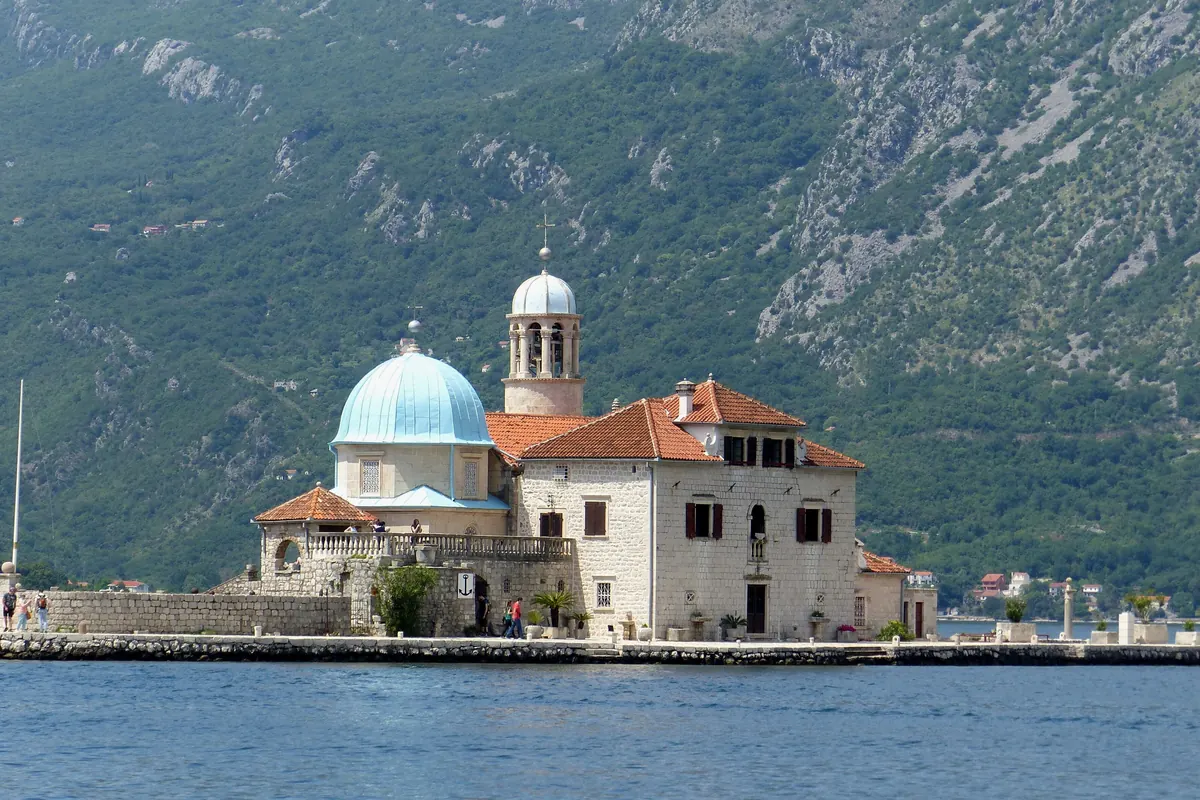
Wikipedia says the islet was created by a bulwark of rocks and by sinking old and seized ships loaded with stones. In another article it calls the island the only artificially built island in the Adriatic and gives its area as about 3,030 square metres. Whatever the exact figure, the effect is a small, flat platform in the bay, with a church and a stone wall that seem to rise straight out of the water.
The legend of 1452
According to the legend, local seamen found an icon of Madonna and Child on a rock in the sea on 22 July 1452. Each time they returned from a successful voyage they laid another rock, and over the centuries the islet emerged. Wikipedia adds that the custom is still alive. Every year at sunset on 22 July, local residents take boats out and throw rocks into the sea, widening the island, in an event called the fašinada.
The church
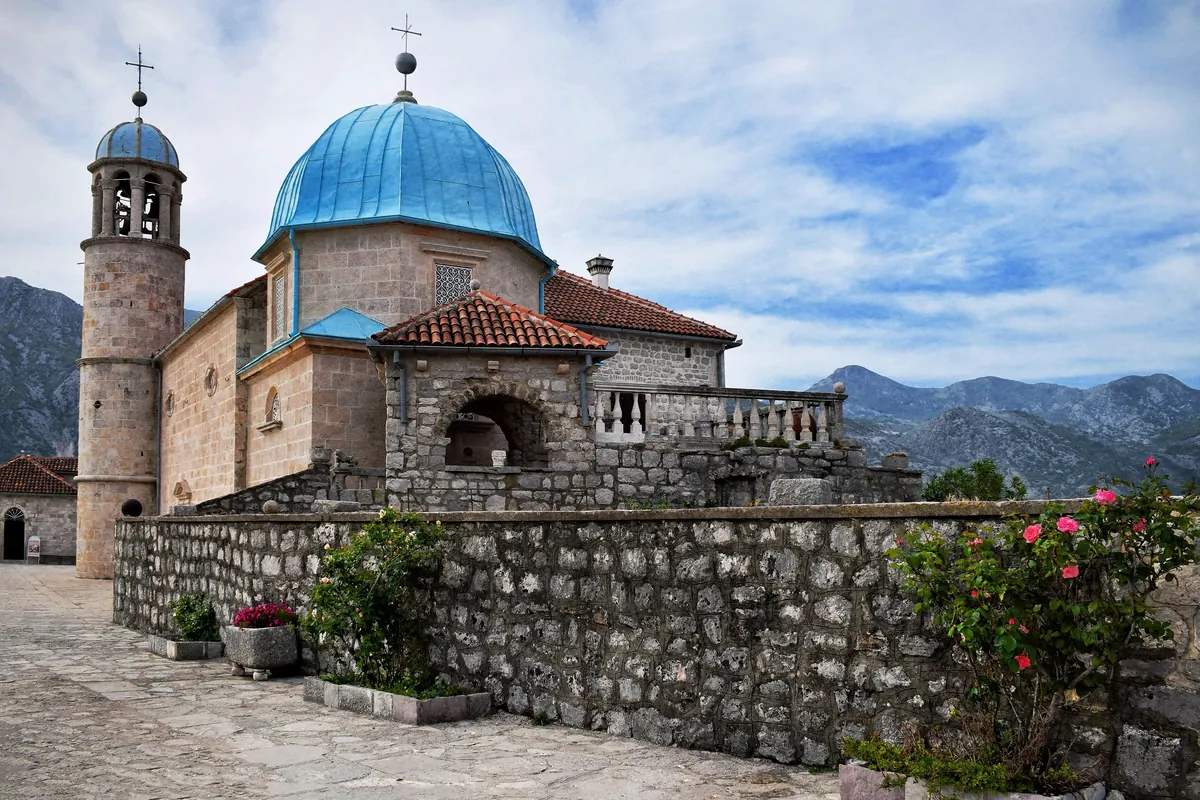
The Catholic church of Our Lady of the Rocks is the largest building on the islet. Wikipedia says it was renovated in 1722. You see its blue dome and bell tower from far across the bay, and the stone wall and terrace close up if you step ashore. The tour stops here for about twenty minutes, which is enough to walk around, take photographs and, if you wish, go in.
The museum
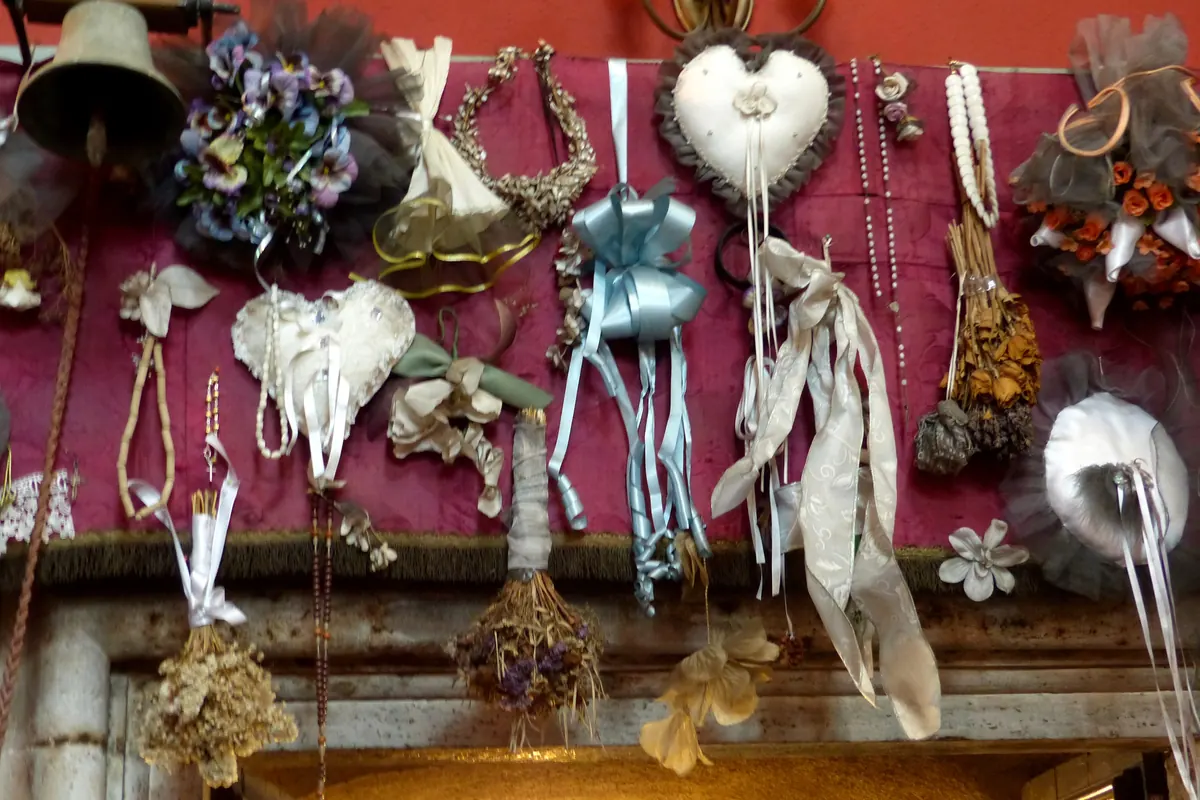
The museum is attached to the church. Wikipedia says it holds 68 paintings by Tripo Kokolja, a 17th-century baroque artist from Perast, and that his most important work, The Death of the Virgin, is ten metres long. It also lists votive paintings, silver votive tablets and a famous tapestry embroidered by Jacinta Kunić-Mijović, who took 25 years to finish it. Entry to the museum is an optional extra paid in cash.
Its neighbour, St George
The second islet, Sveti Đorđe, is close to the church island. Wikipedia's Perast article says the strategically important island of St George belonged to Kotor, which slowed the development of Perast. Another article mentions a Benedictine monastery on a small island opposite the town. Both islets are part of the World Heritage site, and the tour passes St George on the way to the stop at the church island.
Perast around it
Perast sits a short way off, below the hill of St Ilija. Wikipedia says its prosperity came with the Venetian period, particularly after 1482, when the town built the fortress of the Holy Cross and a number of defensive towers. It later built baroque palaces and churches. When you look at the islet from the water, the line of stone houses behind it is Perast, and the mountains behind them rise steeply.
What to wear
Entry to the church is not allowed in swimwear. Men and women both need covered shoulders and modest-length shorts, a skirt or a dress. That matters on a boat tour that ends with a swim, so wear a cover-up over your swimwear or pack dry clothes. The island itself can be visited even when the church or museum is closed, and opening hours change with the season.
Seeing it without landing
You do not have to step ashore. On the Blue Cave run the boat passes St George, the second islet, and the church island, and the stop on the islet is optional. Many visitors take their photographs from the water and stay on board. If you do land, remember that the stop is short, so decide beforehand whether you want to go inside.
Frequently asked questions
Is Our Lady of the Rocks a real island?
It is an artificial island, made from rocks and sunken ships over generations. Wikipedia says it is the only artificially built island in the Adriatic.
What happens on 22 July?
Local residents take their boats and throw rocks into the sea at sunset, widening the island, in an event called the fašinada.
Can I go in wearing swimwear?
No. Entry to the church is not allowed in swimwear, and shoulders and knees need to be covered.
Is the museum worth it?
It holds paintings by Tripo Kokolja and votive offerings, according to Wikipedia. Entry is an optional extra paid in cash.
Sources